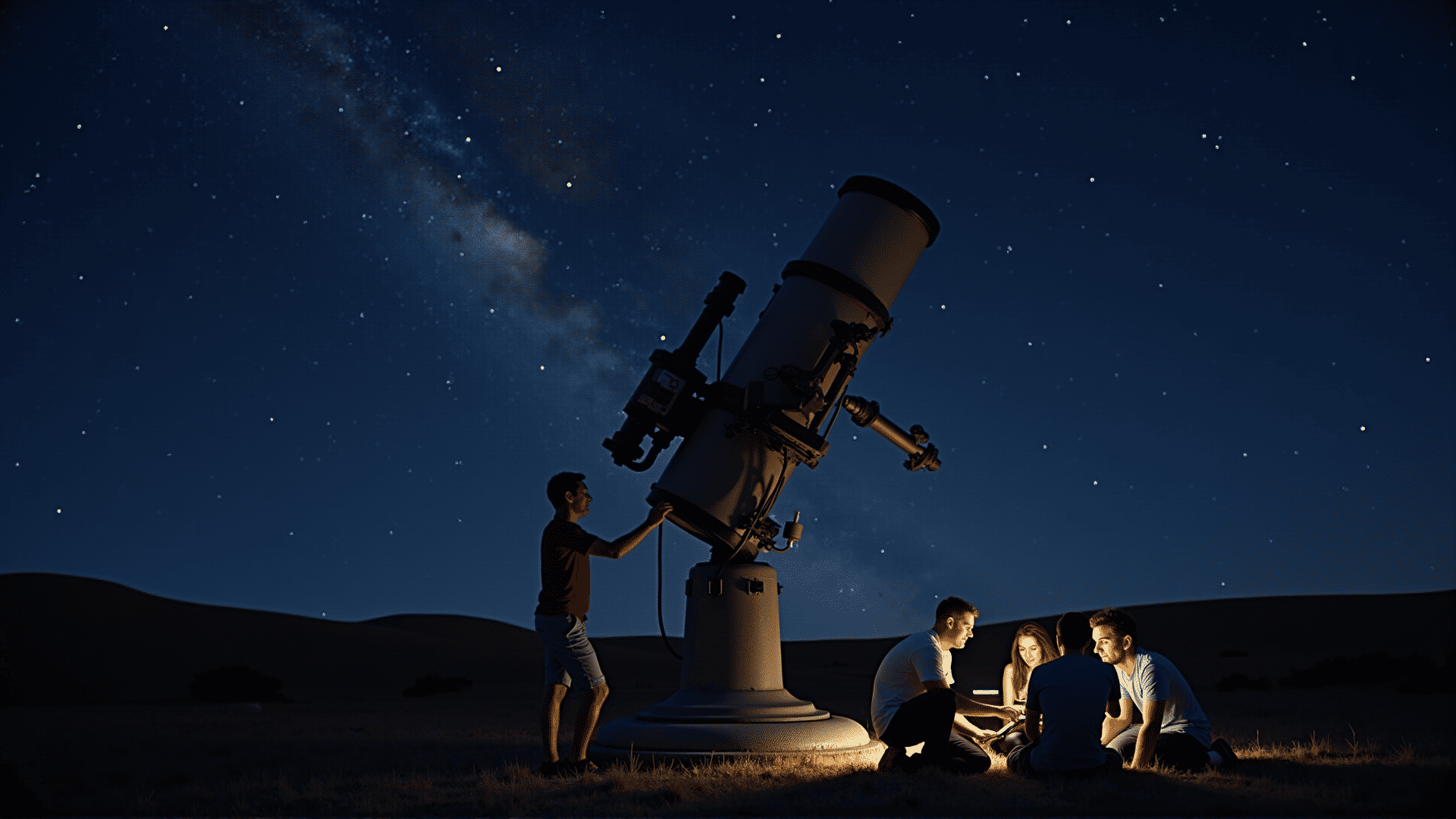
In the vast expanse of the universe, where time and space stretch beyond our imagination, astrophysics serves as a beacon, guiding humanity's unrelenting quest to understand the cosmos. As we gaze upon the night sky, peppered with distant stars and galaxies, we are reminded of the magnitude of what lies beyond our earthly confines. It is through the lens of astrophysics that we attempt to uncover the mysteries that have eluded us for millennia.
Astrophysics, the branch of astronomy concerned with the physical nature of stars and other celestial bodies, has evolved significantly over the decades. Once reliant on the limited technology of early telescopes, today’s astrophysicists harness the power of sophisticated instruments capable of gazing into the deepest, most concealed corners of the universe. From spectrometers that dissect the light of stars to satellites that scan cosmic microwave backgrounds, the tools at our disposal are more advanced than ever, offering insights that were once beyond our reach.
One of the most enigmatic phenomena that astrophysicists strive to understand is dark matter. This invisible form of matter is hypothesized to constitute about 27% of the universe, yet it does not emit, absorb, or reflect light, rendering it utterly invisible and detectable only through its gravitational effects. Unraveling the nature of dark matter is one of the foremost challenges in modern astrophysics, with experiments around the globe continuously probing its elusive traits.
Closely related to dark matter is the concept of dark energy, a mysterious force that is believed to drive the accelerated expansion of the universe. Together, dark matter and dark energy account for approximately 95% of the universe's total mass-energy content, leaving us with the astonishing realization that the atoms and molecules that make up stars, planets, and all biological entities form merely a small fraction of the cosmos. Understanding these dark components is pivotal not only to comprehending the large-scale structure of the universe but also to anticipating its ultimate fate.
Black holes, with their gravitational forces so intense that nothing, not even light, can escape their grasp, present yet another profound cosmic mystery. The study of black holes, particularly the supermassive varieties that reside at the centers of galaxies, has advanced remarkably with the help of gravitational wave observatories. These observatories have captured the ripples in spacetime caused by colossal cosmic events such as black hole mergers, shedding light on the dynamic and violent evolution of the universe.
Astrophysics also peels back the layers of time, offering glimpses into the origins of the cosmos. The study of the afterglow of the Big Bang—the cosmic microwave background radiation—provides a snapshot of the universe in its infancy. Analyzing this ancient light helps astrophysicists ascertain the universe's age, composition, and the earliest conditions that seeded the formation of structures we observe today.
In addition to exploring these grand cosmic questions, astrophysics plays a crucial role in probing the potential for life beyond Earth. By studying the atmospheres of exoplanets in distant solar systems, scientists hope to identify conditions conducive to life, thus addressing one of humanity’s oldest questions: Are we alone in the universe?
As we continue our exploration, astrophysics remains an ever-evolving journey. With each discovery, we not only advance our understanding of the cosmos but also redefine our place within it. The mysteries of the universe challenge our perceptions and inspire us to venture deeper into the uncharted territories of space. In doing so, we are reminded of the boundless possibilities that await us in the grand cosmic adventure.